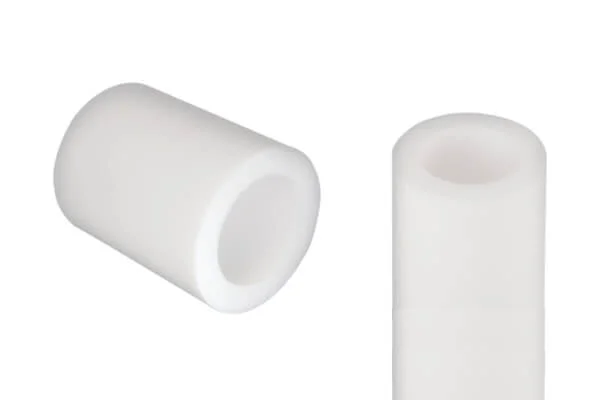
Mechanical seals in the form of rings constructed of PTFE are known as O-rings.FEP and PFA are the two grades of PTFE that are offered. Tetrafluoroethylene is the main component of PTFE. It is made of fluorine or carbon. PTFE is a synthetic material that is used to create PTFE seal rings, terminology apart. While rubber or elastomeric compounds are the most typical materials for O-Rings, specific hardware designs and operating conditions call for the usage of PTFE instead.
Advantages:
- Corrosion protection
- Extended shelf life
- Wide range of temperature tolerance
Disadvantages:
- Increased hardness
- Rate of leakage
- Inelasticity
Like most other O-rings, PTFE O-rings function by sealing the mating surface where two pieces converge. They are frequently utilized in close proximity to pipes, hoses, and other fluid-moving areas. O-rings may effortlessly slide across cylindrical tubes like this due to their ring-shaped construction. Look no further than PTFE O-rings for sealing applications requiring low and medium pressure. For almost all low-pressure and medium-pressure sealing applications, PTFE seal rings are the best choice. Of course, as a gas or liquid warms up, pressure rises. The pressure that is produced by a gas or liquid inside of a route increases with its temperature. Low and medium pressure can be handled by PTFE O-rings without leaking. Mechanical seals composed of PTFE are called PTFE O-rings. Although they are flexible and soft, they are also strong and heat-resistant. You can't go wrong with PTFE if you're looking for O-rings to utilize in a low-pressure or medium-pressure application.
